Robotics · 2026
Downpour.
Design lead for a world-championship competitive robot.
- Role
- Subsystem Design Lead · Driver
- Year
- 2026
Summary
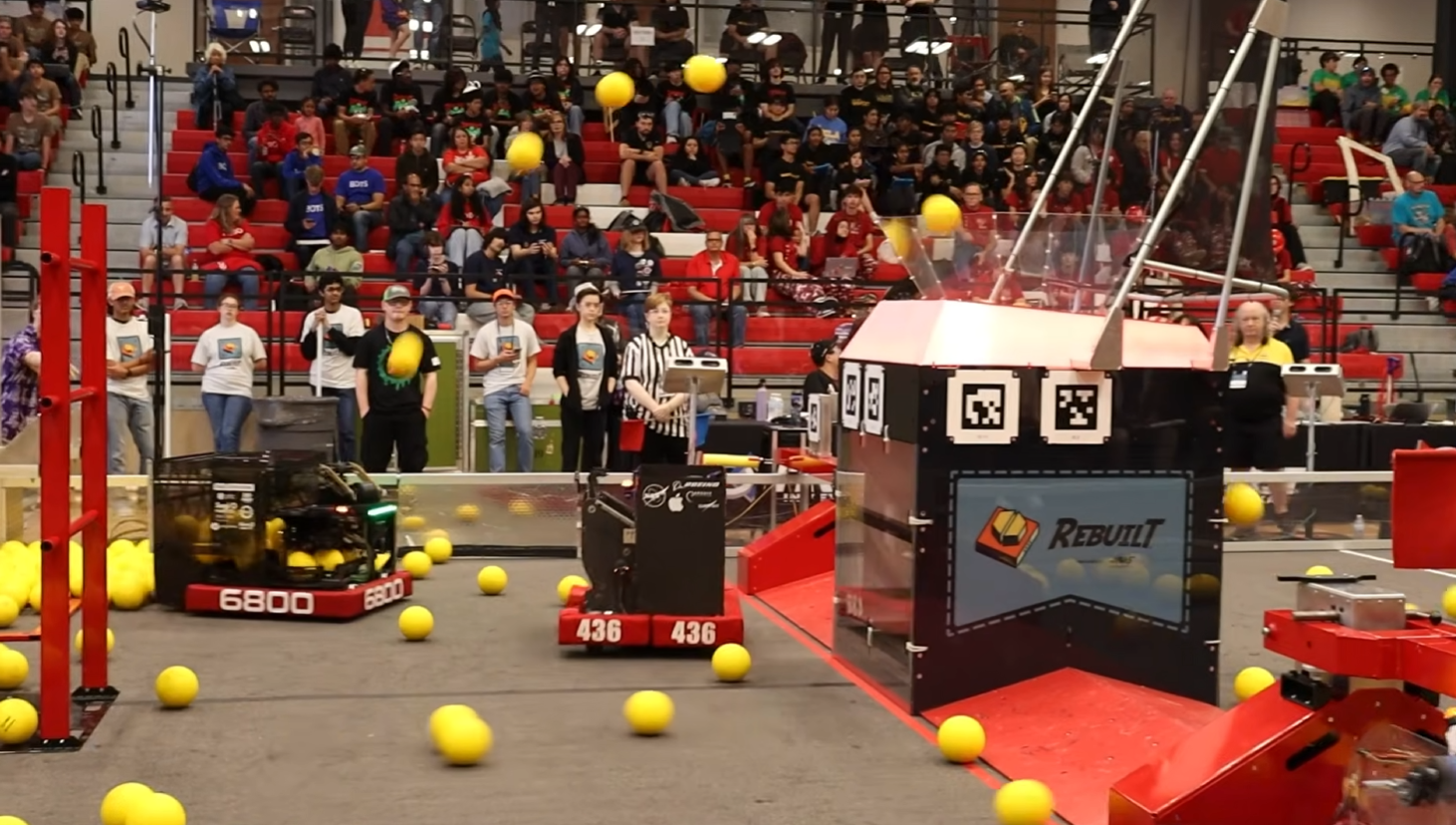
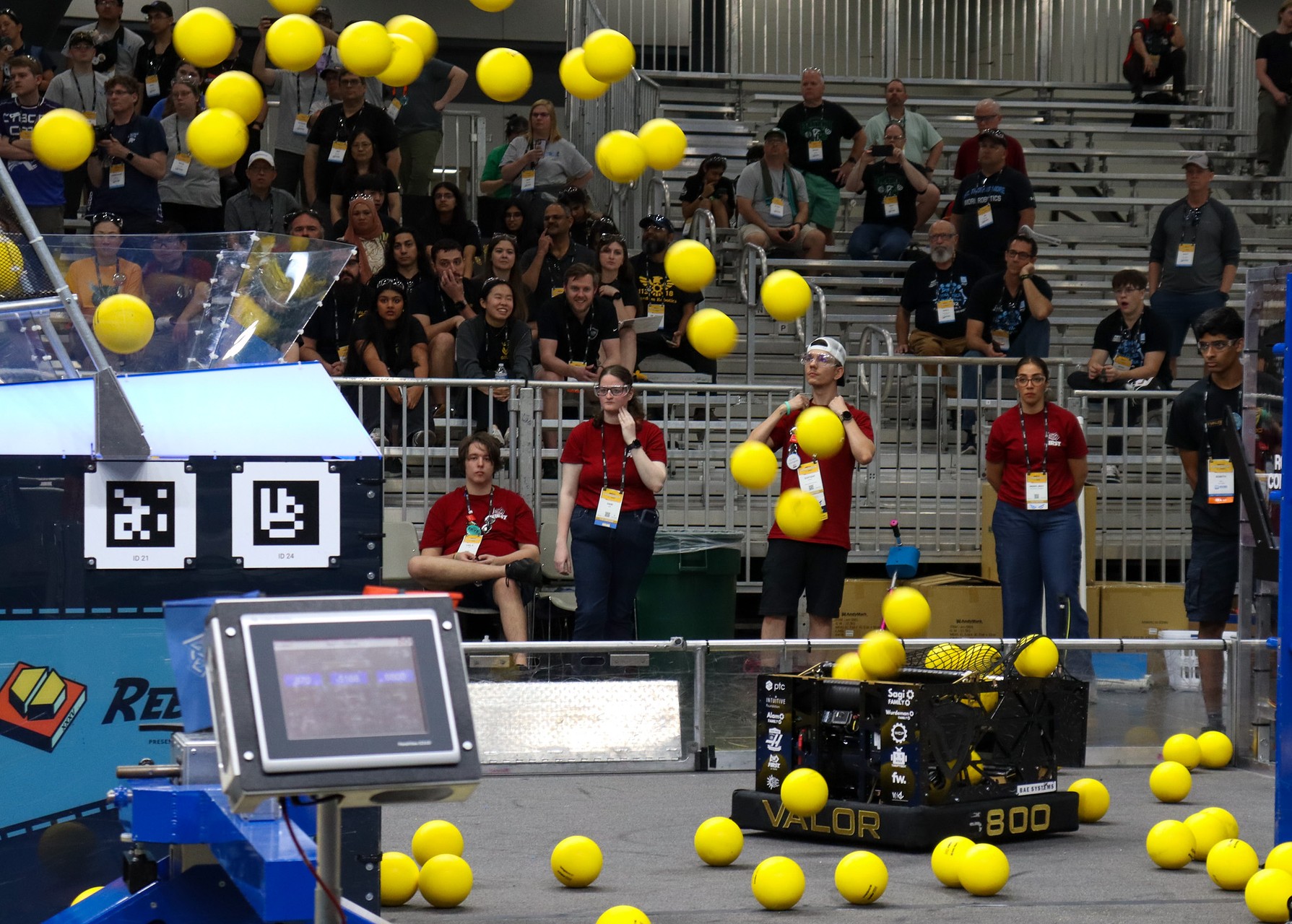
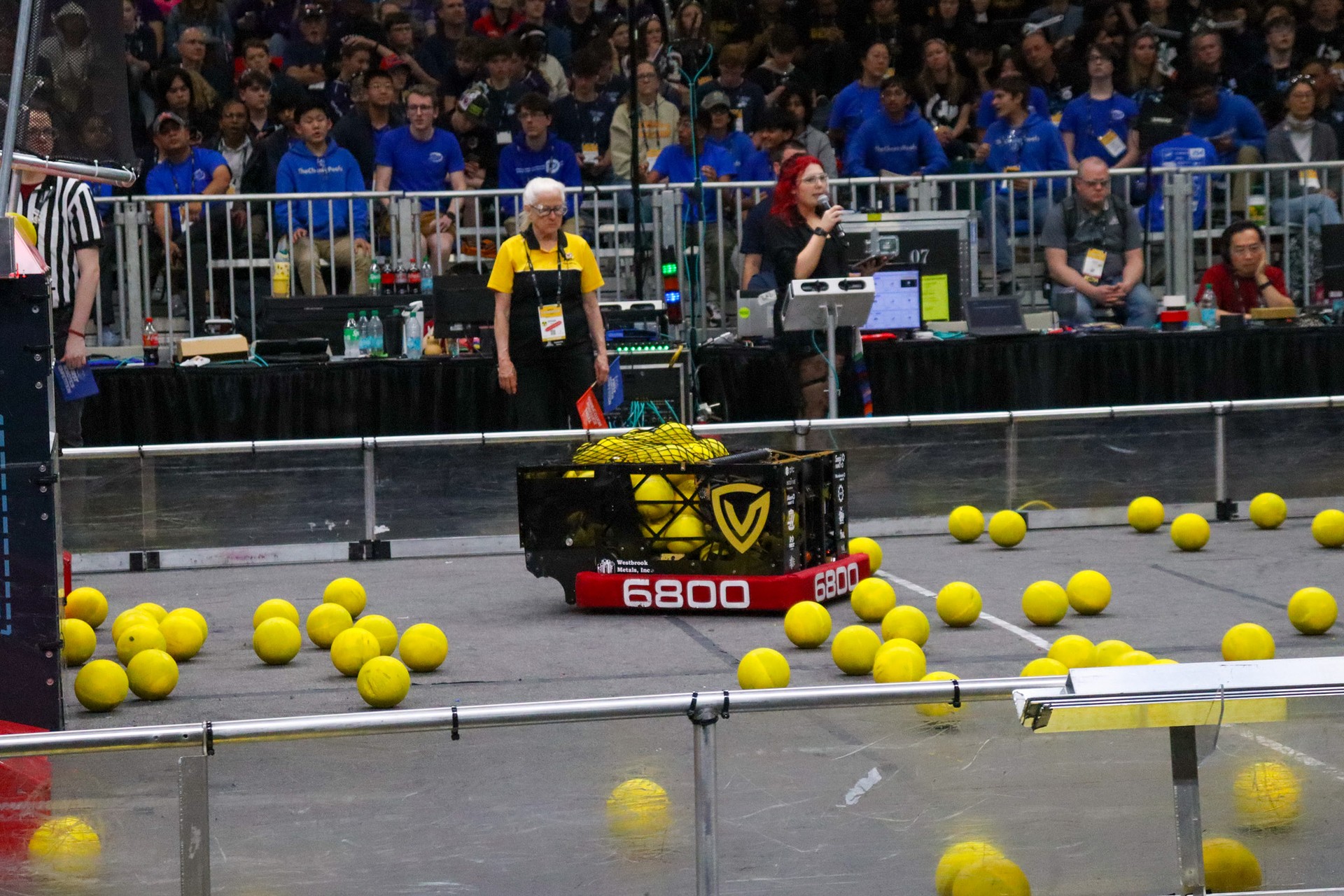
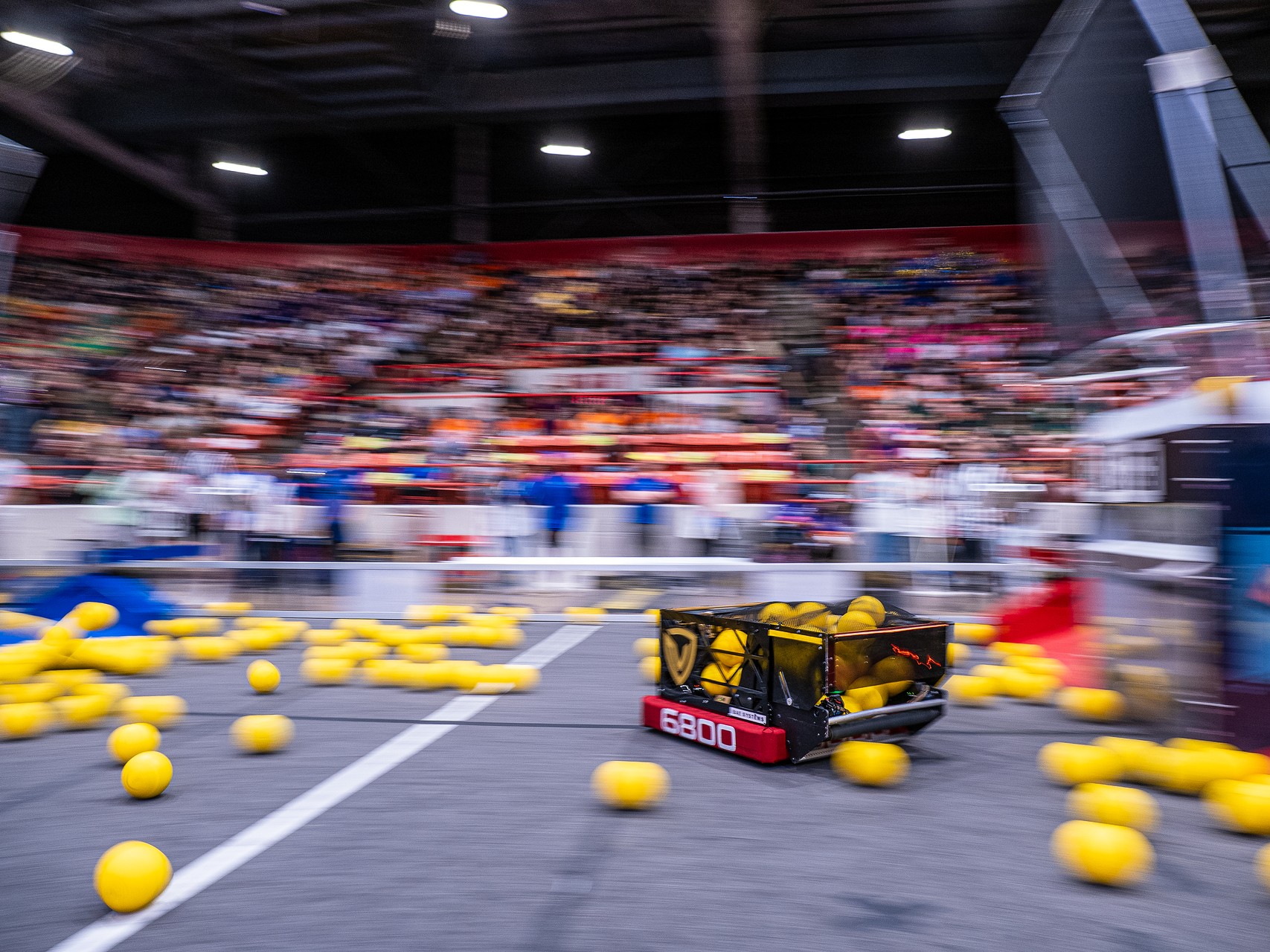
Downpour was our robot for the 2026 FIRST Robotics Competition game Rebuilt. The robot marked a milestone in our team's history, winning the Curie Division at the World Championship and competing in playoff matches on the Einsteins field. Downpour also featured at the Texas District Championship winning runner-up on its debut. The robot earned the Excellence in Engineering Award and Industrial Design Award.
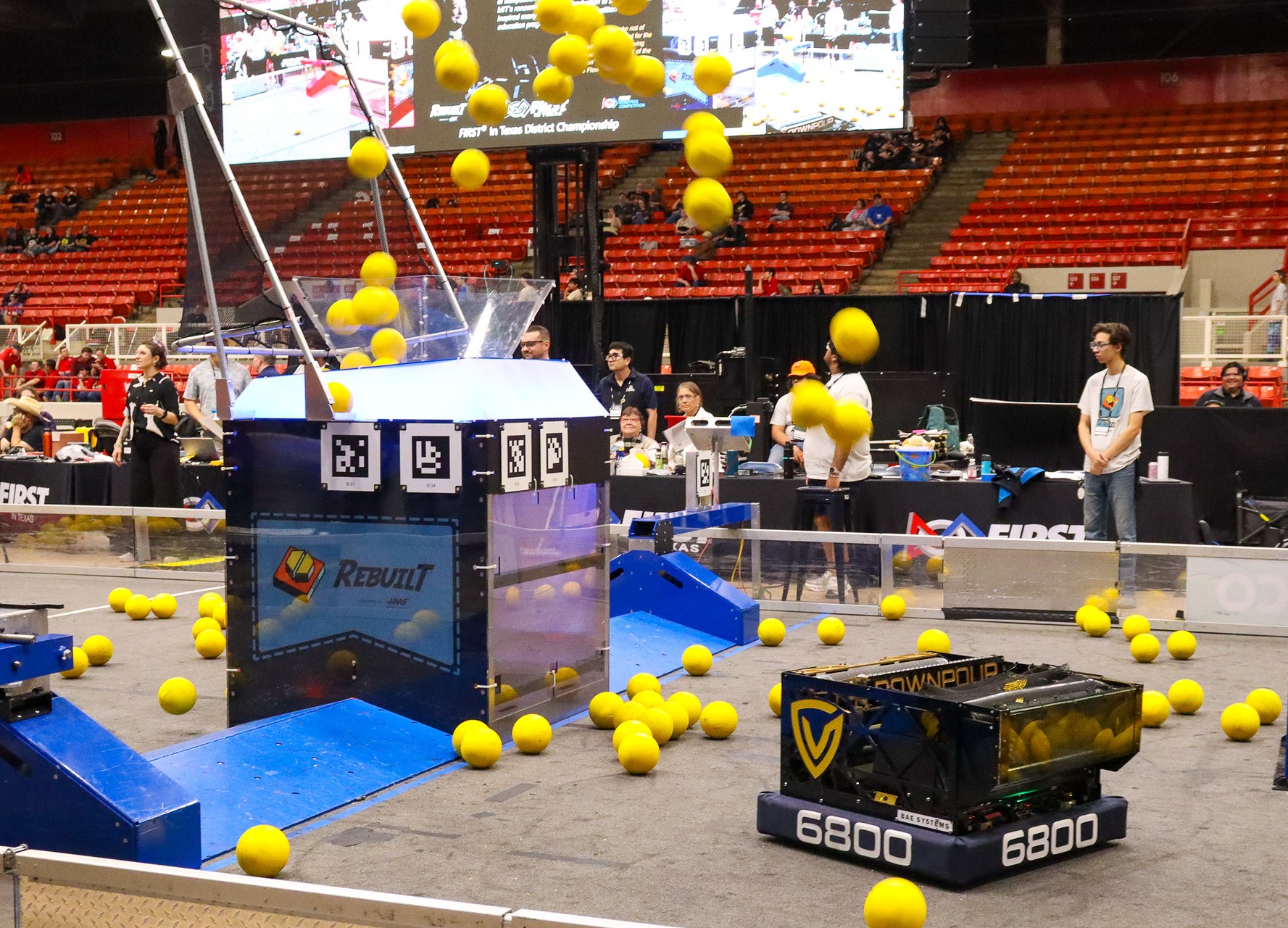
Downpour was designed for a fast paced 3v3 game where robots collect foam balls, called "fuel", and score them in a hexagonal goal or "hub". As a mechanical design lead, I designed the Shooter Subsystem to launch the fuel into the goal. Iterating off of my previous turreted design, that shot a single stream of fuel, Downpour's shooter was designed to launch volleys of fuel using a full-width drum shooter.
Highlights
- FIRST World Championship Curie Division Winner
- FIRST In Texas District Championship Finalist
- 1× Excellence in Engineering Award
- 1× Industrial Design Award
Interactive · CAD · Drum Shooter Design
Toggle the views.
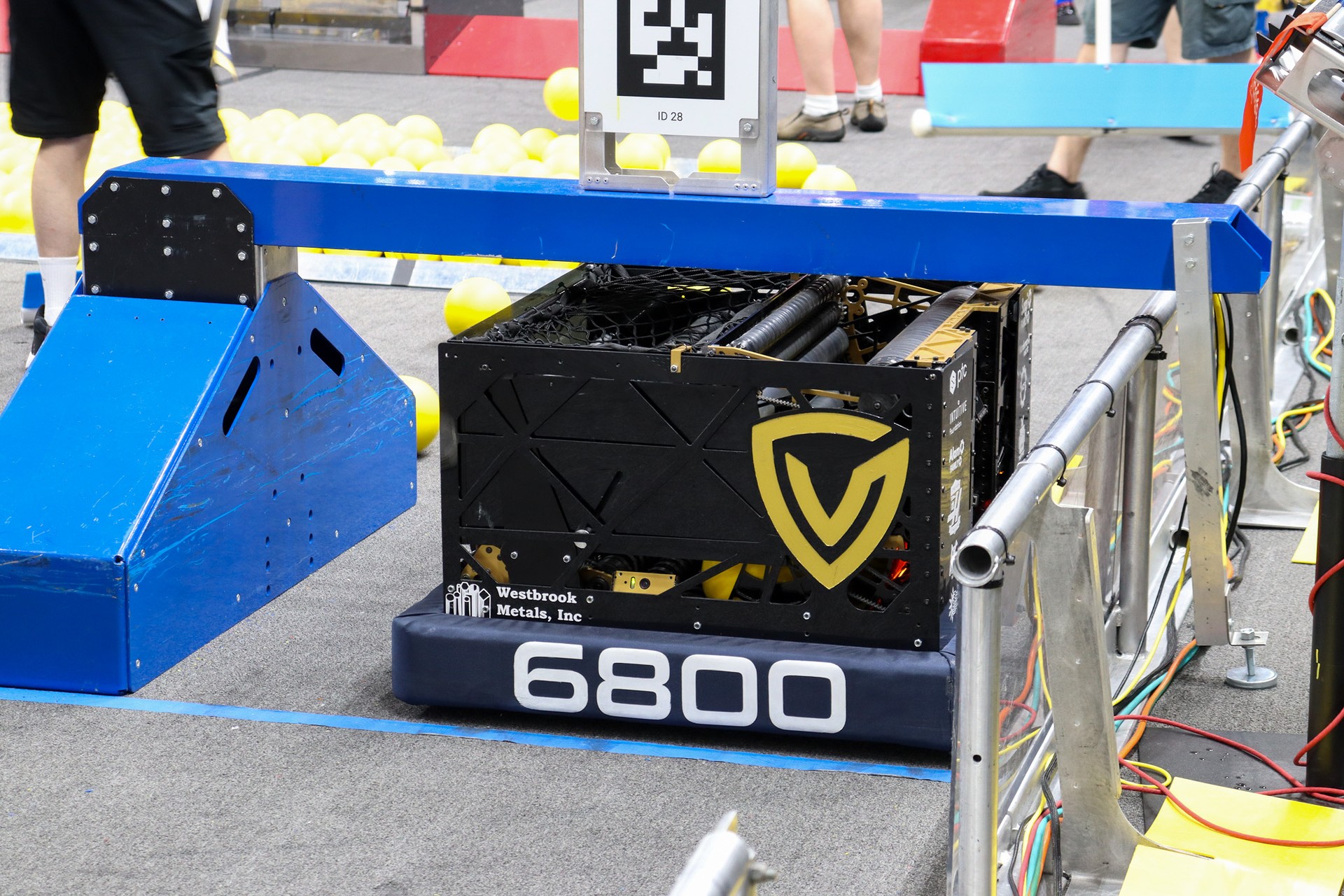
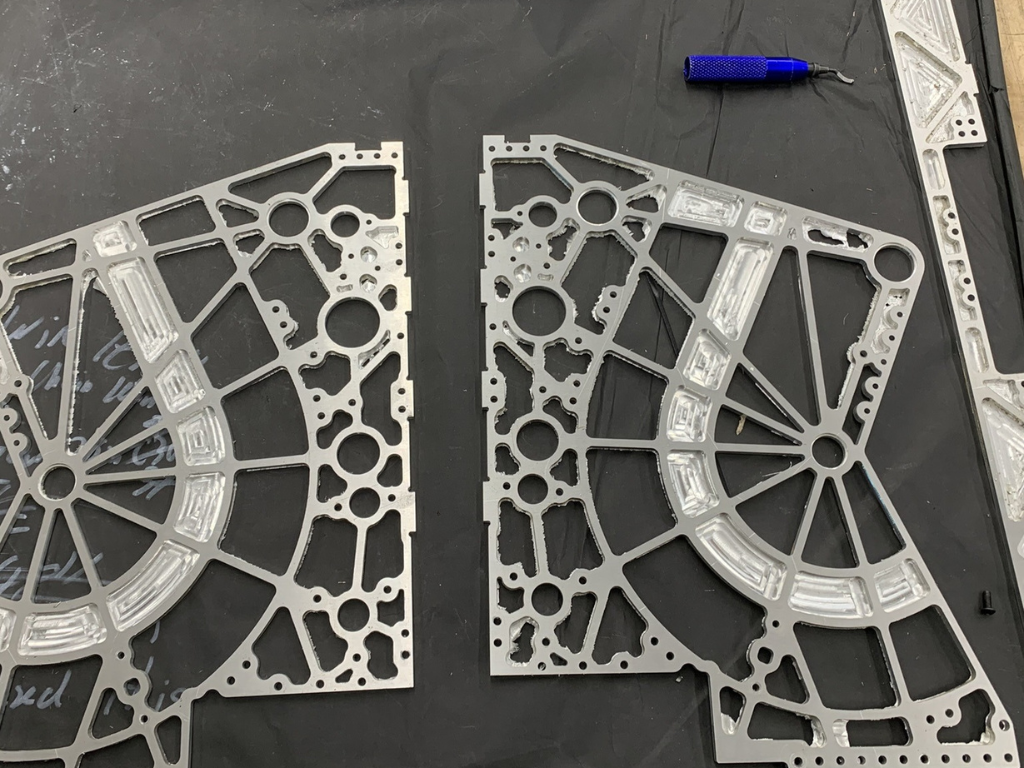
The Shooter Subsystem is made up of three sub-assemblies which I designed using Onshape, including a superstructure, variable hood, and "feeder". The superstructure, constructed from a rigid tab-and-slot aluminum assembly, housed much of the robot's electronics including the power switch, radio, and cameras. Additionally, the structure packaged the 5 Kraken x60 motors used to power the shooter. One of the motors, linked to the hood via belts, controlled the pitch of the hood, allowing the robot to adjust its shot angle according to the distance between the robot and the goal. Three more motors powered the aluminum drum flywheel and polycarbonate back-rollers. Coated in rubber grip tape, these rollers minimized slip while maximizing moment of inertia. This helped maintain consistent wheel speed and reduced motor strain as the system worked to reach and maintain its PID targets during fuel launches. The remaining 2 motors were used to feed fuel from the robot's hopper into the shooter, agitating fuel and pulling it through the system.
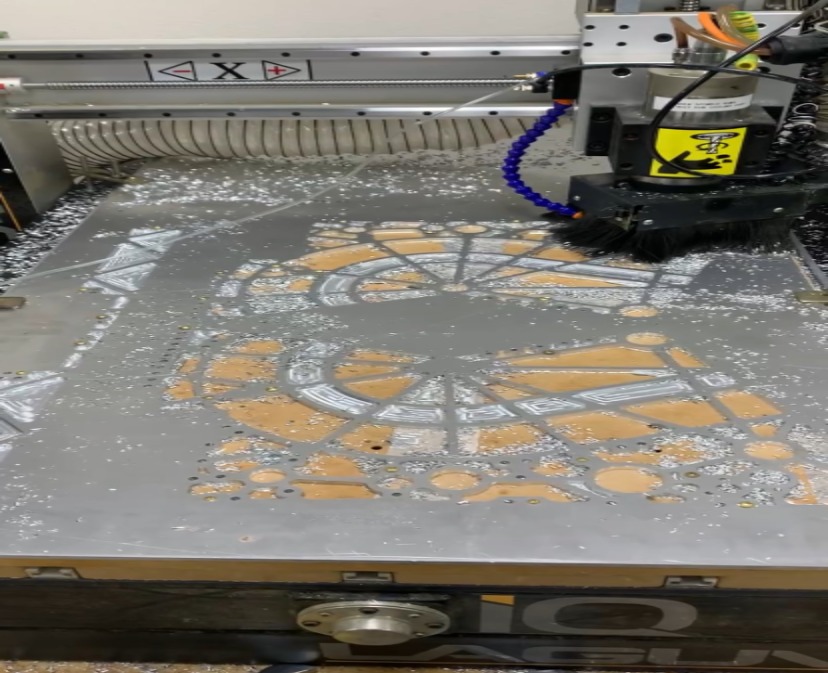
Once the design was complete, parts were converted into manufacturing tickets in Jira to be claimed by members of the manufacturing team. All parts were designed with manufacturing in mind, using features such as tab and slot joints with machining and powder coating tolerances accounted for. Modular subsections also allowed us to add more motors or flywheel mass without redesigning the entire assembly. Using Jira, I ordered COTS parts and verified critical dimensions of parts manufactured in-house. Additionally, I oversaw the powdercoating of parts ensuring that each part was painted the correct color to remain true to the original design.
Once all parts were fabricated, labeled, and verified, I began assembly. Once the subsystem was constructed I worked with the electrical and software teams to integrate the shooter into the rest of the robot. This included providing wiring diagrams and gear ratios to convert motor rotations to mechanical output in code.

Gallery
Inside the build.
Skills Gained
What I sharpened.
Useful Links
Dig deeper.
Keep going