Robotics · 2026
Drizzle.
Design lead for 400 degree turreted ball launcher.
- Role
- Subsystem Design Lead · Driver
- Year
- 2026
Summary
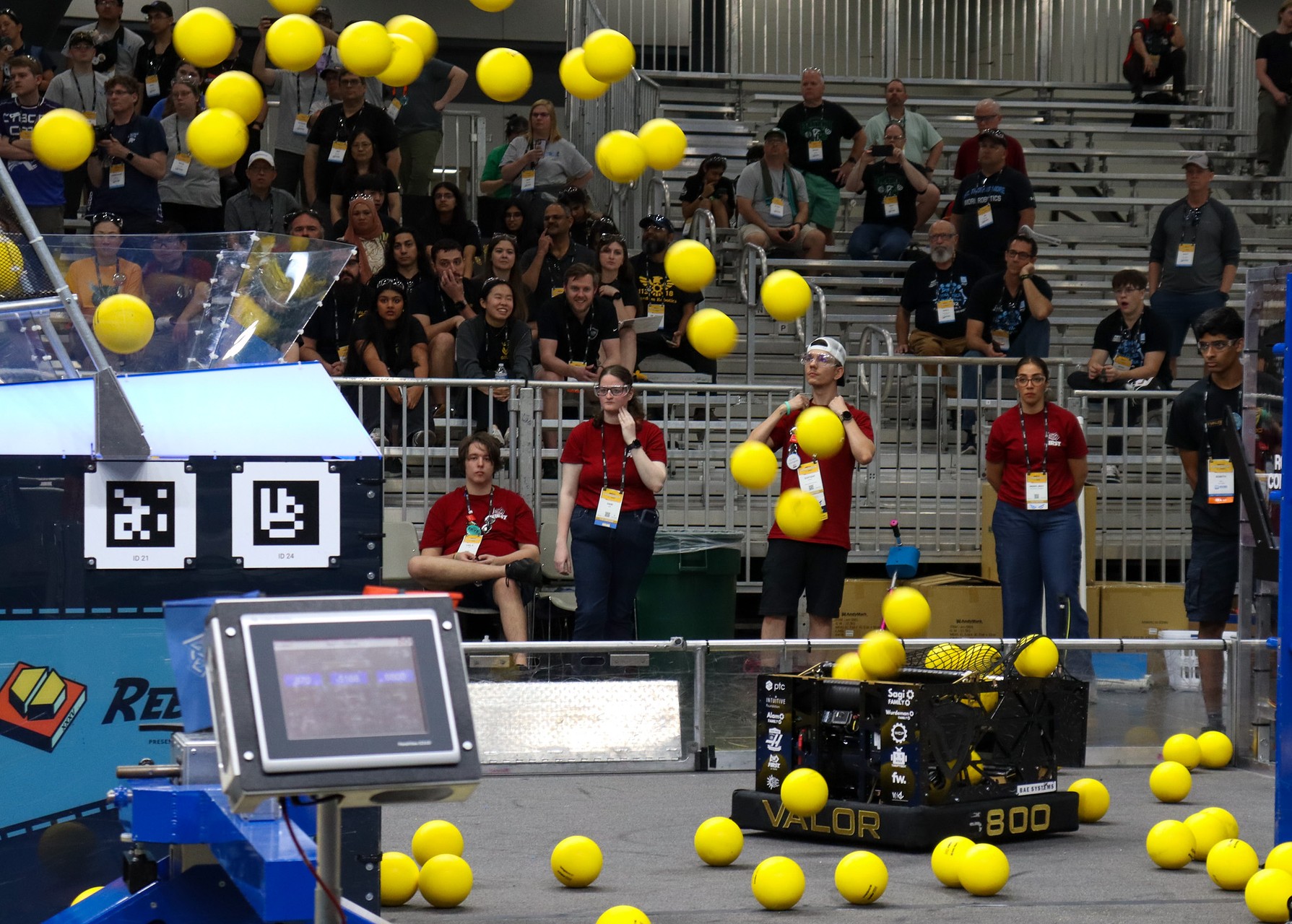
Drizzle was our first robot for the 2026 FIRST Robotics Competition game Rebuilt. The robot debuted at the FIT Space City District Event winning the competition and earning the Excellence in Engineering Award. The robot later won the FIT Manor District Event and was awarded the Engineering Inspiration Award.
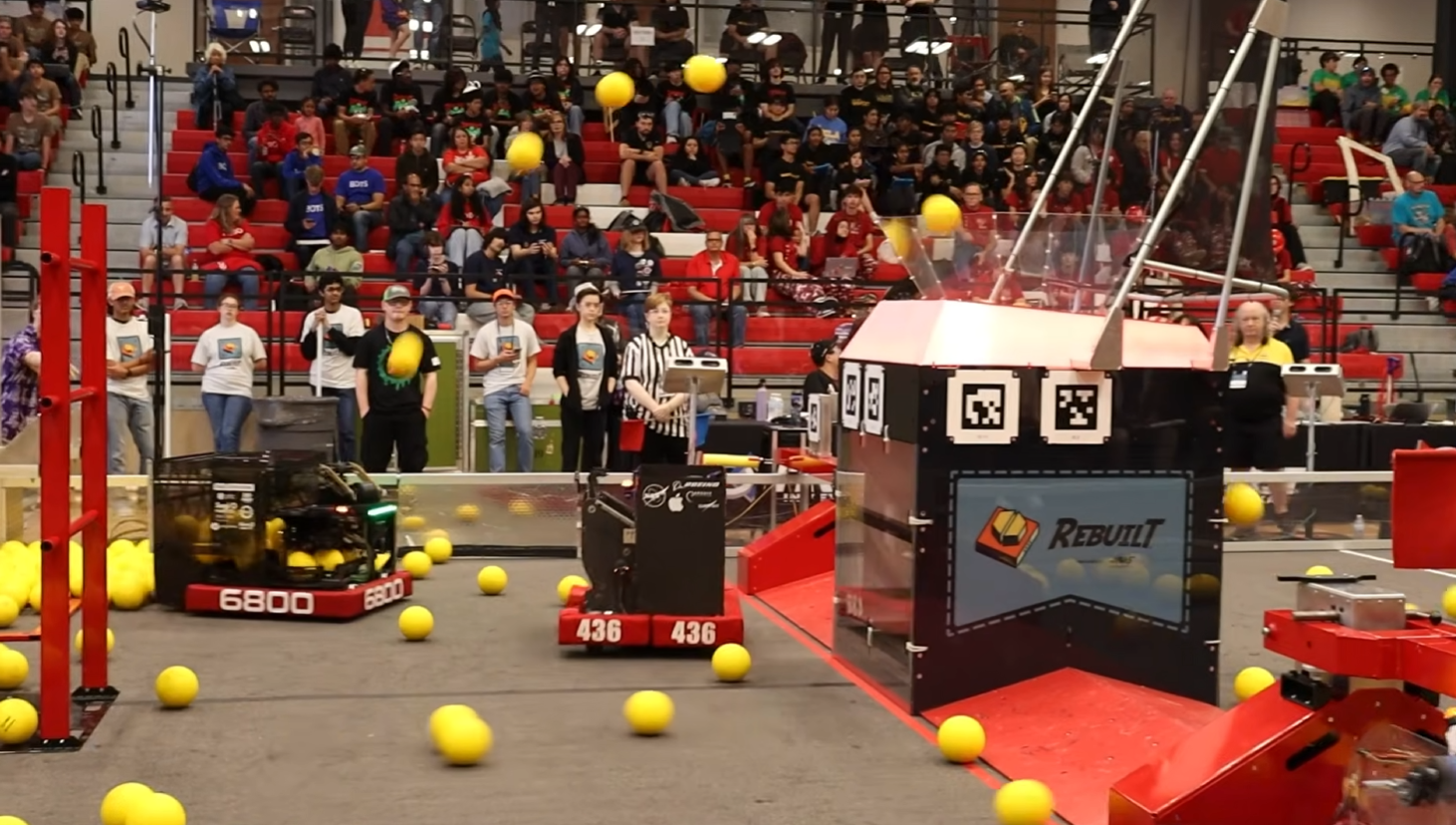
Similar to our second robot Downpour, Drizzle was designed for a fast paced 3v3 game where robots collect foam balls, called "fuel", and score them in a hexagonal goal or "hub". As a mechanical design lead, I designed the Turret and Shooter Subsystems to launch the fuel into the goal from anywhere on the field. Using a turret and adjustable hood, I was able to design a ball launcher that could shoot from any distance both stationary and while moving.
Highlights
- 2× District Event Winner
- 2× Excellence in Engineering Award
- 1× Engineering Inspiration Award
Interactive · CAD · Turret Design
Toggle the views.
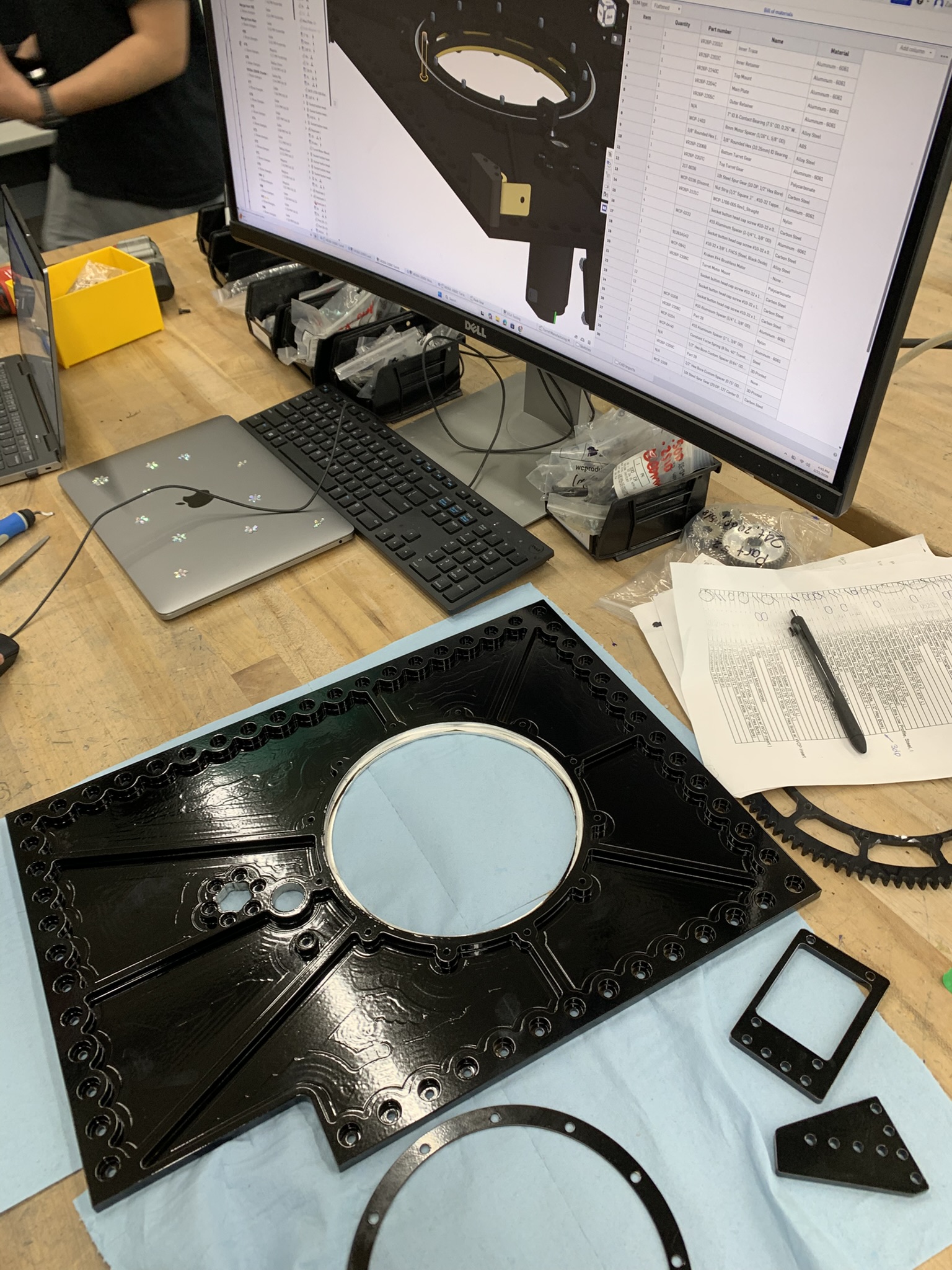
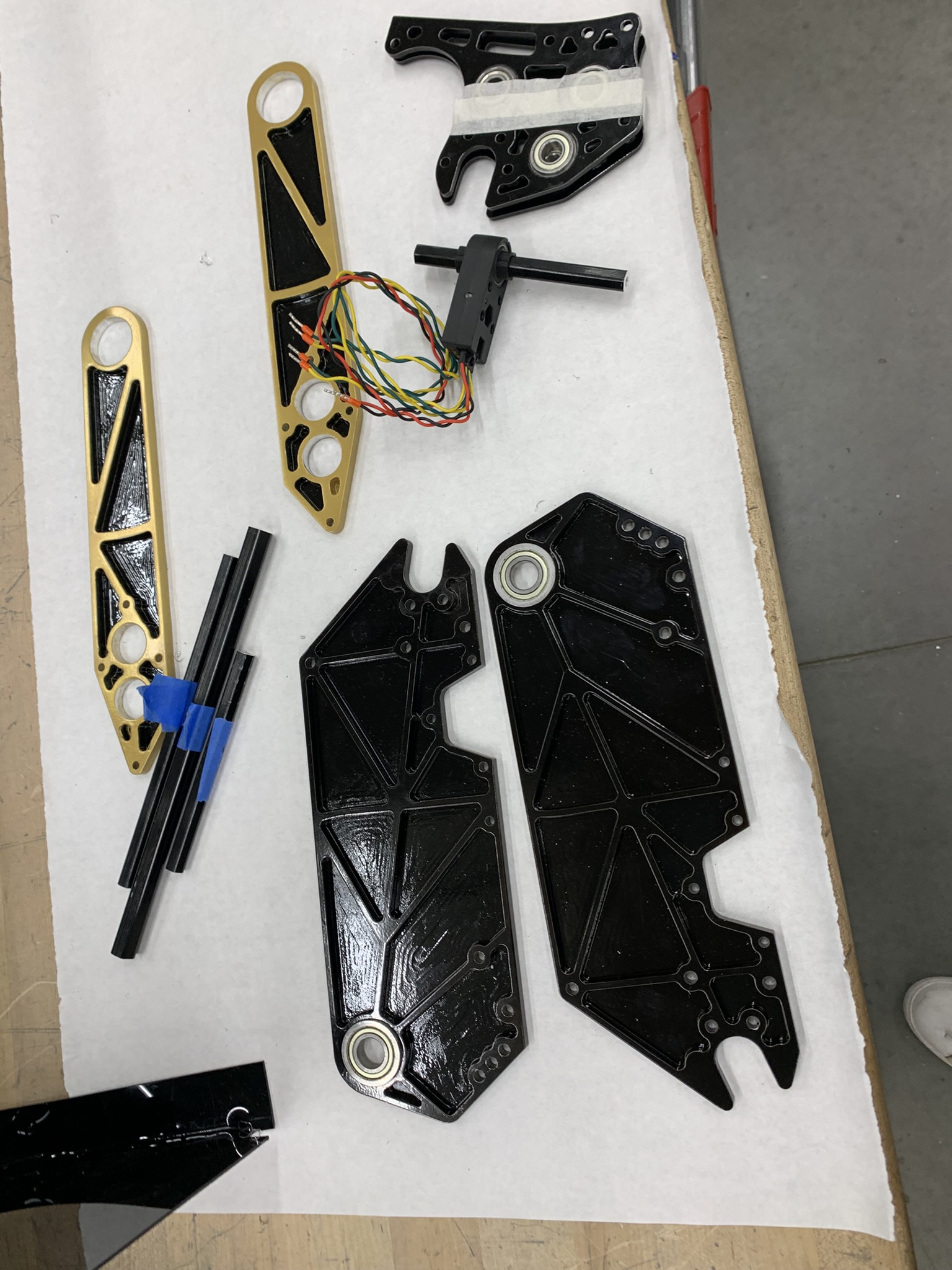
The Turret Subsystem was made up of a rotating turret, compact shooter, and adjustable hood which I designed using Onshape. The turret was limited to roughly 400 degrees of rotation and used bi-directional cable chain to route wiring between the rotating and stationary sections. The turret rings were designed around a 7 inch diameter bearing and required precise machining, tapping, and heat shrinking to assemble the components together. The compact packaging of the turret and shooter mechanism allowed the shooter to rotate without taking up unnecessary space on the robot. The hood used a cycloidal drive to provide torque and precision required to adjust the launch angle.
Packaging was the main constraint throughout the design. The turret has to fit the bearing, drive system, shooter, hood, motors, and cable chain within a limited footprint while maintaining enough clearance for the full range of motion. I designed the turret rings and mounting interfaces around the manufacturing process, accounting for machining tolerances and the fit between the bearing and surrounding components so the turret could be assembled and serviced without removing the entire mechanism.
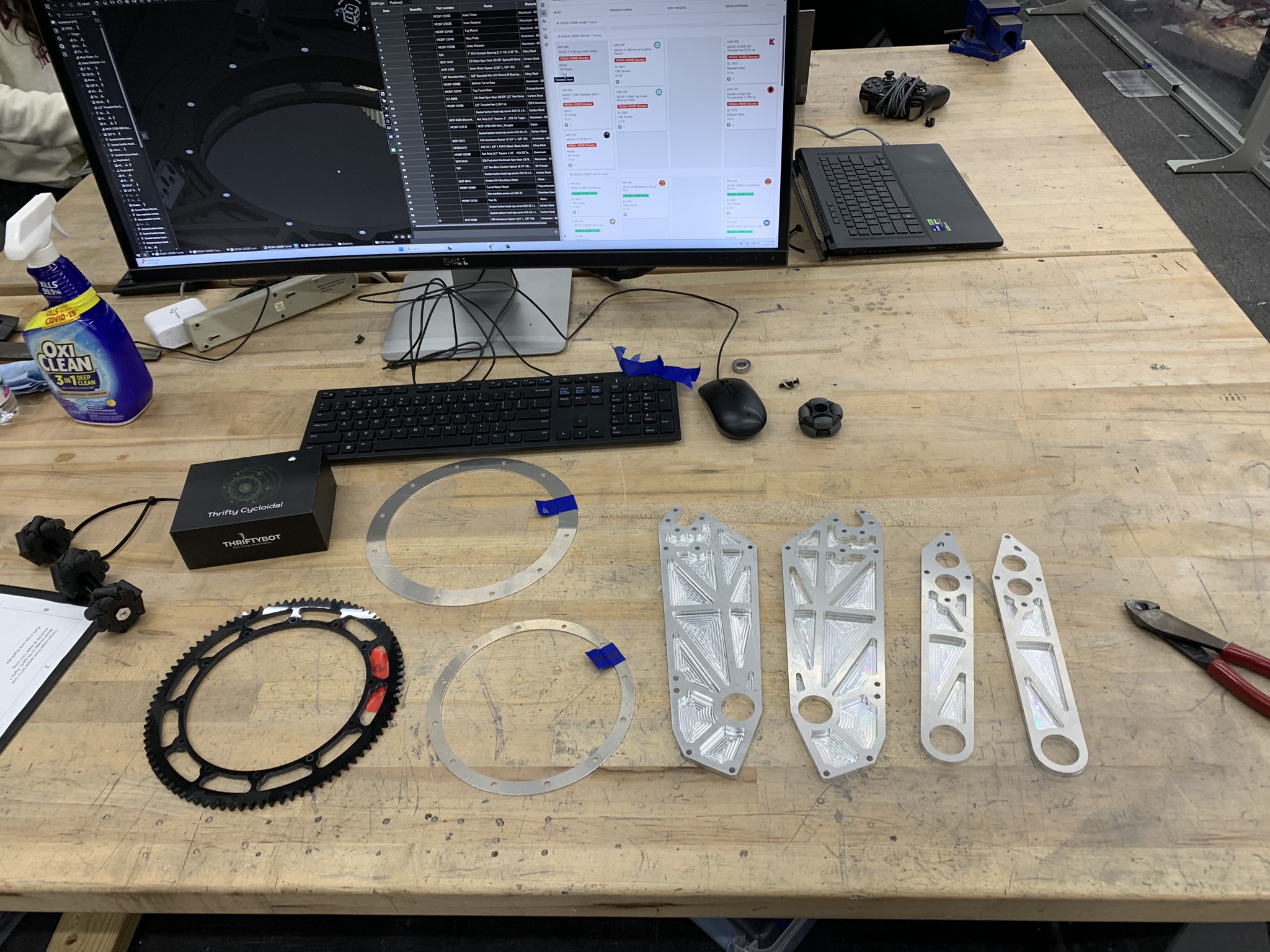
Once the design was complete, I worked with the manufacturing team to machine and assemble the turret components. The rings required precision machining and tapping, while the bearing interfaces used heat fitting to achieve the required fit. After fabrication, I assembled the turret and shooter and worked with the electrical and software teams to integrate the rotating mechanism, including routing the wiring through the cable chain and providing the mechanical details needed to control the turret and hood.

Gallery
Inside the build.
Skills Gained
What I sharpened.
Useful Links
Dig deeper.
Keep going